Army Aviation Now & Then

Army Aviation Now & Then

OUR STORY
The Army Air Corps is an amalgamation of the Glider Pilot Regiment and the Air Observation Post Squadrons of the Royal Air Force.
The Glider Pilot Regiment, formed in 1942, was part of the first Army Air Corps which served with distinction during the War in North Africa, Sicily and NW Europe. It was run down after the War to one squadron and eventually disbanded in 1950. Many of the glider pilots, however, were retrained to pilot light aircraft and formed Light Liaison Flights to serve in the Air Observation Post Squadrons of the RAF. The Air Observation Post Squadrons were originally formed in the period 1940-42. They were RAF units with Royal Artillery pilots and RAF mechanics.
On 1st September 1957 the Air Observation Post Squadrons and the Light Liaison flights were formally amalgamated into a new Army Air Corps. The original badge of the Glider Pilot Regiment, slightly modified, was adopted. The Aircraft became Army property and the Royal Electrical and Mechanical Engineers took over responsibility for the maintenance of all Army Air Corps aircraft.
Middle Wallop was originally an RAF station during WWII – home to Hurricane, Spitfire and Bristol Beaufighter squadrons. In 1957 it was transferred to the Army and has housed the Headquarters Army Air Corps and the Army Aviation Centre ever since.

History of the Army Air Corps
Since our formation, 1st September 1957, the AAC has been active in campaigns world-wide, from Operation CORPORATE in 1982 (The Falklands War) to Operation ELLAMY in 2011 (Libya), detailed below.
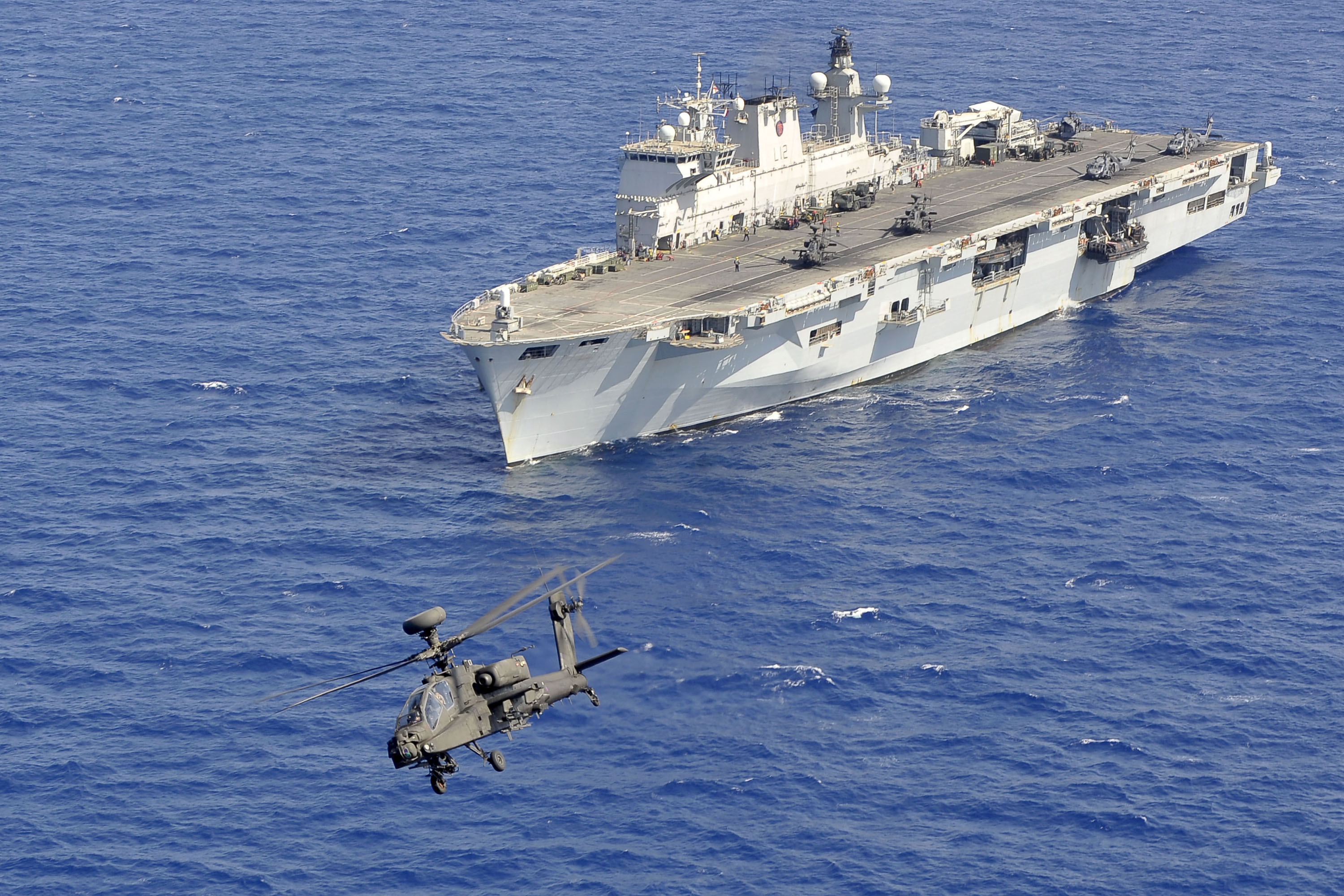
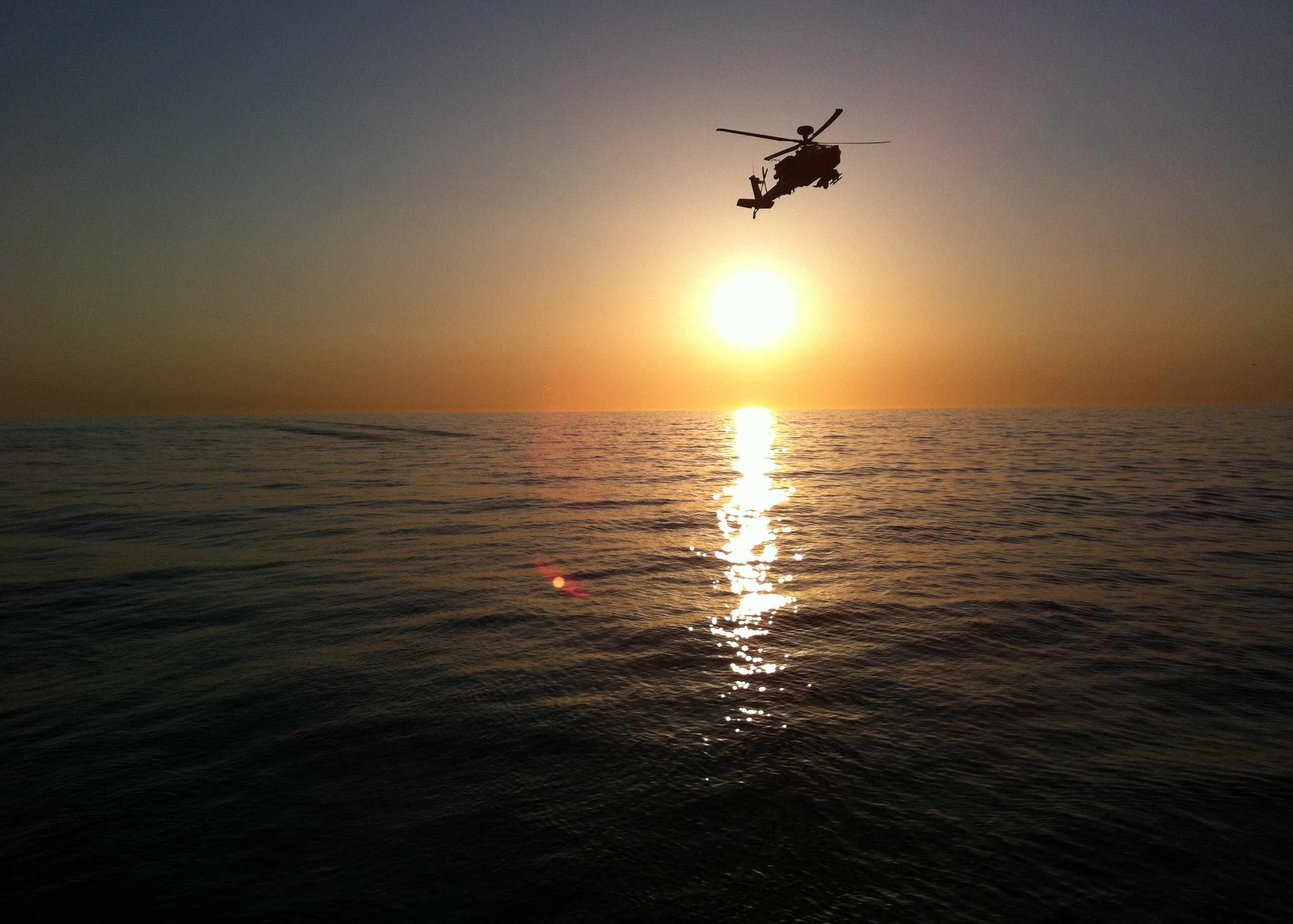
In the summer of 2011, 656 Squadron AAC joined the multinational mission to protect Libya’s civilian population from the Gaddafi regime during the Arab Spring uprising. Operating from HMS Ocean, the squadron flew 48 sorties across 22 strike missions – the first time British Apache attack helicopters had been deployed operationally from a ship.
The threat environment was unprecedented. Libya held tens of thousands of MANPADS* including SA‑24, alongside a dense network of anti‑aircraft artillery and radar‑guided systems such as the ZSU‑23/4, SA‑6 and SA‑8. To mitigate this, every mission was flown at night, at low level, and behind enemy lines.
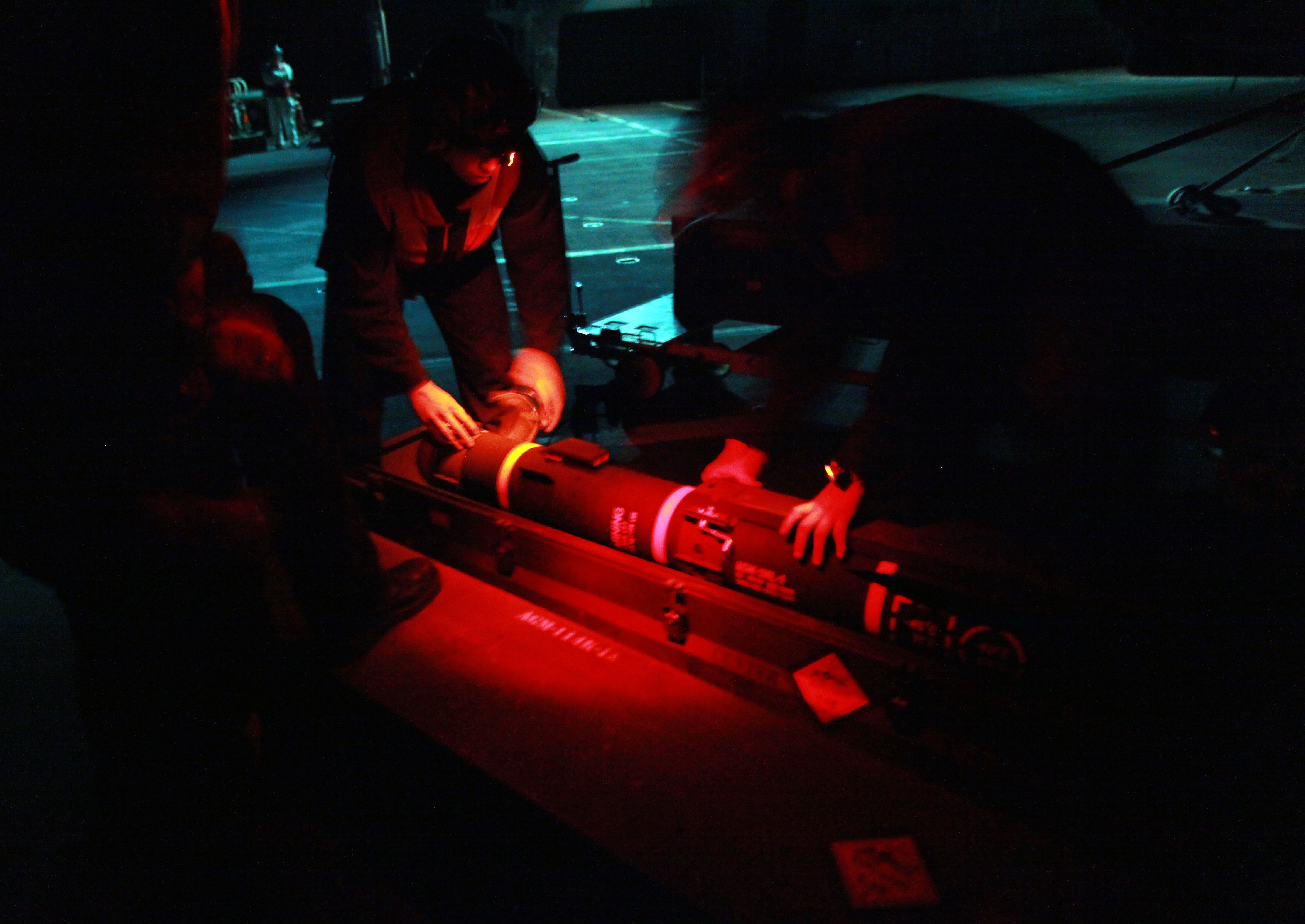
In 64 days, the squadron delivered significant effect firing 99 Hellfire, 4,800 rounds of 30mm, and 16 flechette rockets against 116 targets, including T‑72 main battle tanks, ZSU‑23/4, fast attack craft, technicals, and pro‑Gaddafi units.
The operation integrated Apache planners into both the NATO Combined Air Operations Centre and the UK Maritime Component Staff. Each mission formed part of wider NATO strike packages, frequently coordinated with UK fast jets.
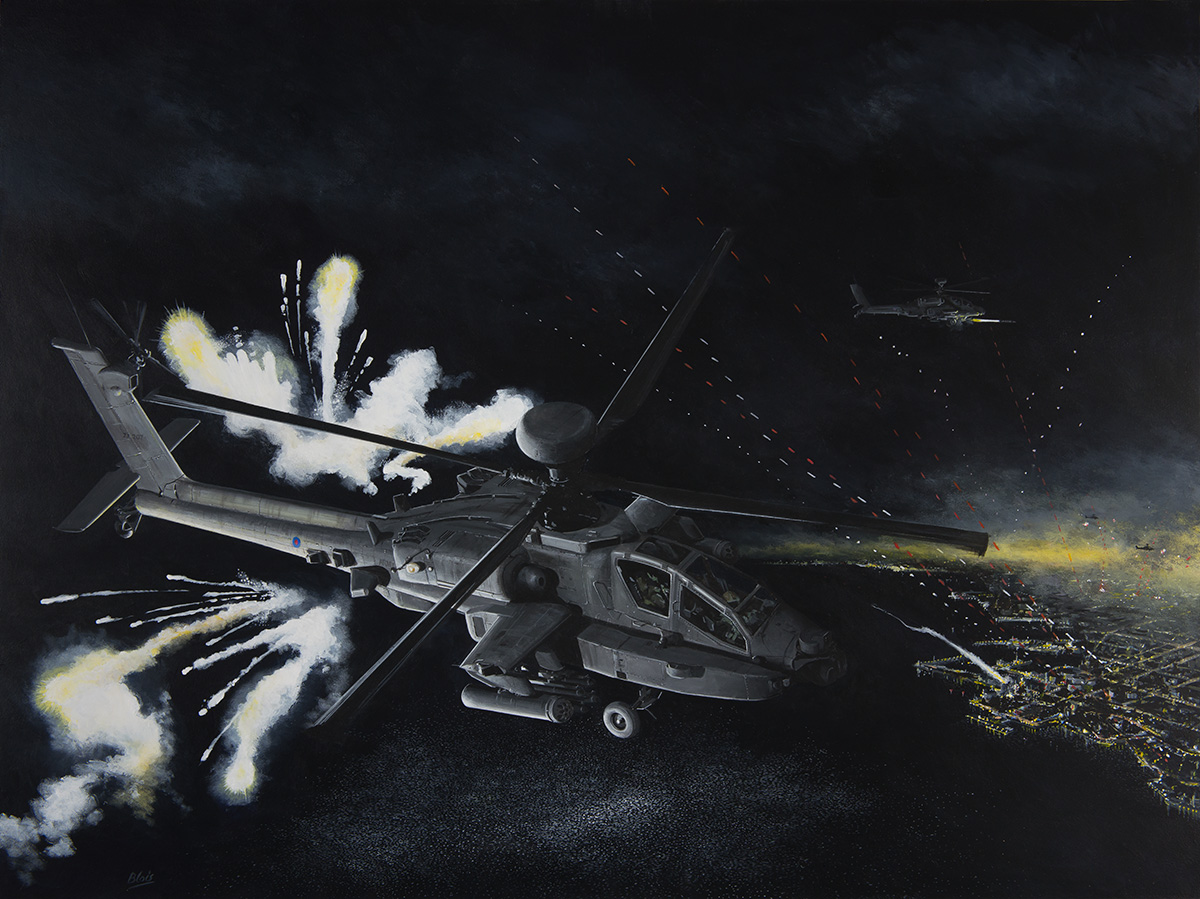
One of these missions is formally commemorated in Derek Blois’ painting The Raid on Brega, which depicts a four‑aircraft Apache operation conducted against the vanguard of the elite 32nd Brigade. The artwork provides a precise and authoritative representation of the mission’s intensity, capturing a highly contested battlespace saturated with anti‑aircraft artillery, SA‑24 MANPADS, and heavy weapons.
Also remarkable is how rapidly the squadron transitioned from training to combat. What began as a five‑week exercise to develop Apache maritime capability shifted to an operational deployment with just six days’ notice – culminating in the team returning home seven months after sailing from Plymouth.
*man-portable air defence systems
Pictured: Top (Right) Raid on Brega by artist Derek Blois.
Thank you to Derek Blois for kind permission to use a copy of his painting. Copyright © Derek Blois 2026.
All other images MOD CROWN COPYRIGHT © 2011.
The Army Air Corps in Action
Click on the headlines below to reveal pictures and information outlining the role of the Army Air Corps in each deployment.
Hong Kong

Kenya

Borneo

Belize

Op BANNER - Northern Ireland

British Army Of the Rhine

British Army Training Unit Suffield - Canada

Op Corporate - Falklands War

Op GRANBY - Iraq

Balkans

Op BARRAS - Sierra Leone

Op TELIC - Iraq

Op HERRICK - Afghanistan


657 Sqn - Through The Years

AAC in the Arctic

Op CABRIT - Estonia

